Wednesday, April 29, 2009

Vintage Computer Brochures

(click the pdf link to view the entire brochure)

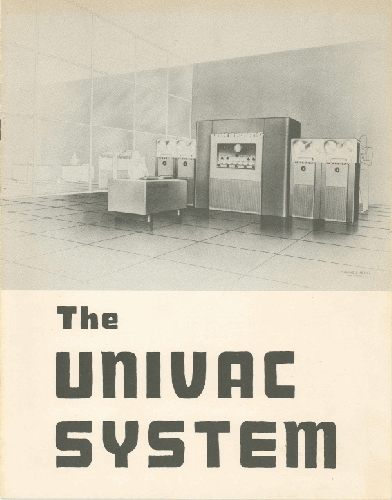
The Univac System (Eckert-Mauchly Computer Corporation, 1948) [pdf]

Bendix G-15 General Purpose Digital Computer (Bendix Corporation, 1955) [pdf]


Heath Inexpensive Electronic Analog Computer Kit (Daystrom, 1956) [pdf]


Univac solid-state computer "...a major breakthrough for Business- America" (Remington Rand Univac, 1958) [pdf]


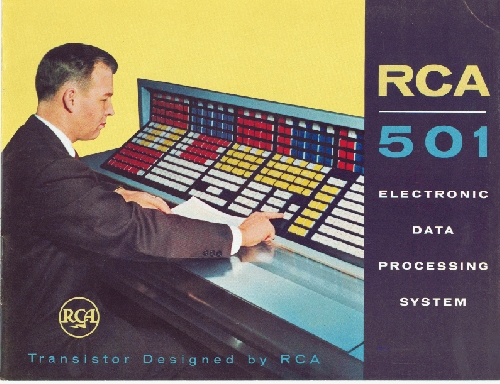
RCA 501 Electronic Data Processing System (RCA, 1958) [pdf]

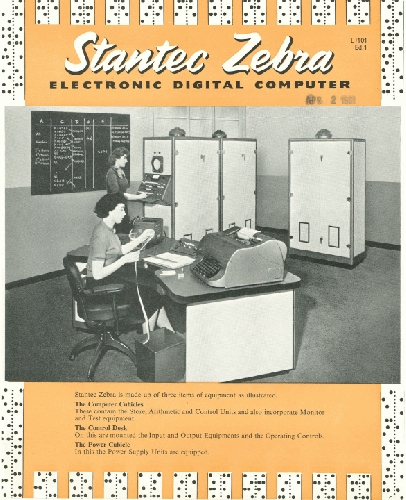
Stantec Zebra Electronic Digital Computer (STC, 1958) [pdf]

General Electric Proudly Presents the New GE 150 Data Processing System for the Automation of Business Data Processing (General Electric, 1959) [pdf]


NCR CRAM: Card random access memory (NCR Corporation, 1960) [pdf]

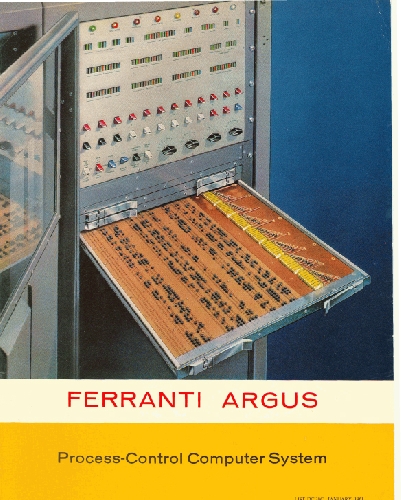
Ferranti Argus Process-Control Computer System (Ferranti Limited, 1961) [pdf]

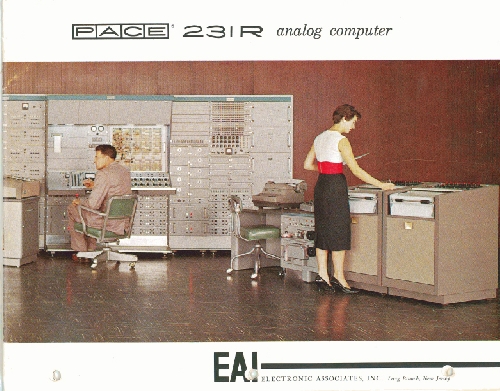
Pace 231R Analog Computer (Electronic Associates, 1961) [pdf]

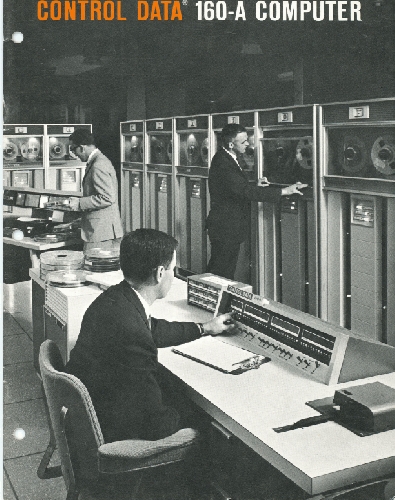
Control Data 160-A Computer (Control Data Corporation, 1962) [pdf]

Some facts about the Control Data 6600 (Control Data Corporation, 1963) [pdf]


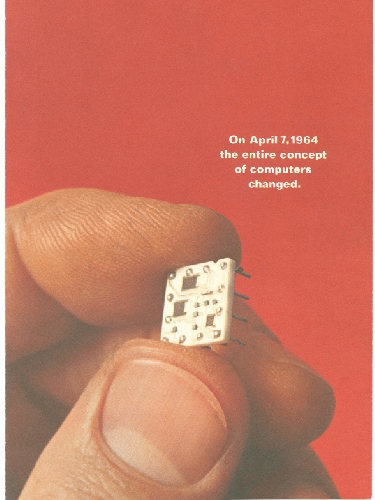
On April 7, 1964 the entire concept of computers changed. (IBM, 1964) [pdf]

I.C.T. 1900 Data Processing System (International Computers and Tabulators, 1964) [pdf]


TR-20, TR-48 Desk Top Analog Computers "...for the Ultimate in High-Speed, Low-Cost Problem Solving Capabilities" (Electronic Associates, Inc., 1964) [pdf]


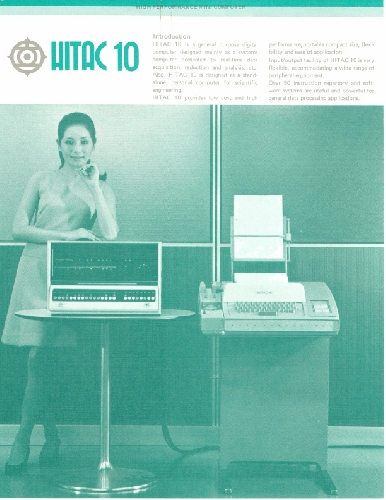
HITAC 10: High Performance Mini Computer (Hitachi, Limited, 1969) [pdf]

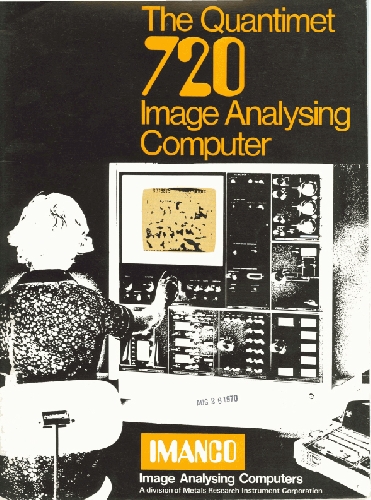
The Quantimet 720 Image Analysing Computer (Metals Research Instrument Corporation, 1970) [pdf]

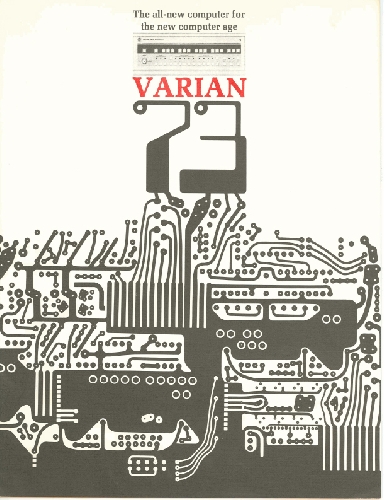
The All-New Computer for the New Computer Age VARIAN 73 (Varian Data Machines, 1972) [pdf]

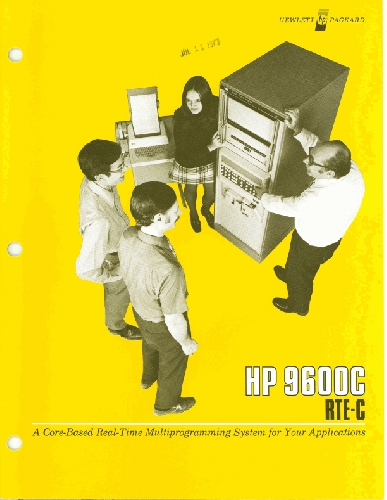
HP 9600C RTE-C: A Core-Based Real-time Multiprogramming System for your Applications (Hewlett-Packard, 1973) [pdf]

-
see more Brochures at the Computer History Museum [link]
more early computer ads [link]
information at The UVa Computer Museum [link]
more info at Obsolete Computer Museum [link]

Monday, April 13, 2009

Russian Revolutionary Periodicals 1905-1906

"On Sunday, January 9th, 1905, Tsar Nicholas II ordered trooops to fire on a peaceful procession of workers demonstrating in St. Petersburg, unleashing a storm of strikes, mutinies, violent uprisings, and brutal reprisals that raged across Russia for well over a year. Known collectively as the Revolution of 1905, these upheavals transformed the political landscape and set the stage for the Russian Revolution of 1917 and the Civil War that followed. Bloody Sunday also marked an important watershed for Russian graphic artists. With the momentary collapse of censorship, over 300 different satirical magazines were published during the Revolution of 1905, more than had seen the light of day in Russia during the entire 19th century. Most of them survived for only a few numbers before the censors caught up. Yet the output was impressive all the same. Rushing to fill the expressive void, artists and writers captured the events and personalities of the revolution with biting satire and aesthetic sophistication. While styles and subject matter varied, artists often chose to depict nightmarish scenes of bloodshed and repression, drawing on images of the macabre and the mystical that had already been in vogue in Symbolist circles across Europe at the turn of the century." - from Beinecke Rare Book & Manuscript Library

Zalp
, No. 1 (1906)


Svietaet, No. 2 (1906)


Zarnitsy, No. 3 (1906)


Zanoza, No. 2 (1906)


Ovod, No. 1 (1906)


Zhupel, No. 3 (1906)


Zhupel, No. 2 (1905)


Zhupel, No. 2 (1905)


Iumoristicheskii almanakh, No. 63 (1906)


Maski, No. 1 (Feb 1906)


Shut : khudozhestvennyi zhurnal karikatur, No. 36 (1906)


Maski, No. 1 (Feb 1906)


Zritel, No. 19 (1905)


Skorpion, No. 2 (Feb 1906)


Buria, No. 4 (Jan 1906)


Gamaiun, No. 1 (1906)


Voron, No. 1 (1906)


Karikaturnyi listok gazety gazet
, No. 1 (1905)


Deviatyi val, No. 2 (Jan 1906)


Burelom, No. 3 (Jan. 1906)


Zarevo, No. 1 (Feb. 1906)


-See the whole stunning collection of Russian Graphic Art and the Revolution of 1905 at Yale University's Beinecke Rare Book & Manuscript Library [link]

Sunday, April 12, 2009

"Dying Speeches" Execution Broadsides

"Just as programs are sold at sporting events today, broadsides -- styled at the time as "Last Dying Speeches" or "Bloody Murders" -- were sold to the audiences that gathered to witness public executions in eighteenth- and nineteenth-century Britain. These ephemeral publications were intended for the middle or lower classes, and most sold for a penny or less. Published in British towns and cities by printers who specialized in this type of street literature, a typical example features an illustration (usually of the criminal, the crime scene, or the execution); an account of the crime and (sometimes) the trial; and the purported confession of the criminal, often cautioning the reader in doggerel verse to avoid the fate awaiting the perpetrator." -from Harvard Law Digital Collection [link]


The Trial and execution of John Holloway, for the murder and dismemberment of his wife, Celia (1831)


Trial and execution of François Benjamin Courvoisier, for the murder of Lord William Russell (1840)


Trial and execution of James May, Thos Williams, and John Bishop, for the murder of Carlo Ferrier (1831)


The trial, confession and execution of John and Eliz. Smith, for the murder of their daughter Mary Ann Smith (1812)


The trial and execution of James Hill and John Reeves, for the murder of John Richardson (1834)


Trial and execution of William Johnson for the murder of Benjamin Danby (1832)


The trial and execution of the Bristol Rioters, five to be executed and nineteen to be transported for life. (1832)


Trial and execution of Captain William Moir for the murder of William Malcomb (1830)


"Heart-rending execution of Fanny Amlett : a grazier's daughter, near Scarborough, who was basely seduced from home by a naval officer, who broughther to disgrace, and then deserted her. She became pregnant, ... in a fit of despair, and scarce knowing what she did, she drowned her new-born babe: for which she was brought to trial, and executed." (1813)


"Execution and confession of W. Corder : for the murder of Mary Martin in the red barn" (1828)


Trial and execution of Hunt and J. Thurtell : for the horrid murder of Mr. Weare (1823)


"The execution of Wm Cundle and John Smith for High Treason"


-See the whole fascinating collection of Dying Speeches & Bloody Murders: Crime Broadsides at the Harvard Law Digital Collection [link]
-more information and links can be found at The Proceedings of Old Bailey: London's Central Criminal Court, 1674 to 1913 [link]
 
*please cite or link when reposting*